
When Does Machinery Require Notified Body Approval?
20 Jul 2026
The Relationship Between Harmonised Standards, Presumption of Conformity, Technical Documentation, and Conformity Assessment Routes
One of the biggest areas of confusion within machinery compliance is understanding when a manufacturer can self-declare CE compliance and when involvement from a Notified Body becomes necessary.
Many manufacturers assume that any machine containing safety-related systems, programmable electronics, or safety functions automatically requires third-party approval before it can be placed on the European market. In reality, this is often not the case.
For most industrial machinery, manufacturers are permitted to self-declare compliance under the Machinery Directive 2006/42/EC and the new Machinery Regulation (EU) 2023/1230. However, this depends heavily on the conformity assessment route selected, the technologies used, and whether harmonised standards have been correctly applied.
Understanding this distinction early in development is critical. Incorrect assumptions around conformity assessment can lead to unnecessary cost, delayed market access, and avoidable redesign activities late in the project lifecycle.
What Does Self-Declaration Actually Mean?
Under self-declaration, the manufacturer is responsible for demonstrating that the machinery complies with the applicable European legislation.
This typically involves:
- Performing a risk assessment
- Identifying applicable Essential Health and Safety Requirements (EHSRs)
- Applying relevant harmonised standards
- Compiling a technical file
- Verifying and validating the machine
- Issuing the EU Declaration of Conformity
- Applying the CE mark
The manufacturer carries the full legal responsibility for compliance and must be capable of defending the technical decisions and evidence supporting the CE marking.
The Role of Harmonized Standards
Manufacturers are not legally required to use harmonized standards. However, deviating from them increases the burden of technical justification and can significantly complicate the conformity assessment process.
Harmonized standards create a legal presumption that the applicable Essential Health and Safety Requirements (EHSRs) have been satisfied for the hazards covered by those standards.
For machinery safety systems, examples of commonly applied harmonized standards include:
- EN ISO 12100 – Risk assessment and risk reduction
- EN ISO 13849-1 – Safety-related parts of control systems
- EN 62061 – Functional safety of machinery control systems
- EN 60204-1 – Electrical equipment of machines
This is one reason standards such as ISO 13849 are so widely used within machinery applications. They provide manufacturers with a recognized and accepted route for demonstrating compliance against the Machinery requirements.
In many cases, where the applicable harmonized standards are fully applied, a manufacturer can self-declare compliance without mandatory Notified Body involvement.
When Does a Notified Body Become Necessary?
Under both the Machinery Directive and Machinery Regulation, mandatory Notified Body involvement is primarily linked to higher-risk machinery categories and whether applicable harmonized standards have been fully applied.
Historically, this was strongly linked to Annex IV machinery categories under the Machinery Directive. Under the new Machinery Regulation, increasing regulatory attention is being placed on:
- Autonomous machinery
- AI-enabled safety functions
- Self-evolving systems
- Advanced programmable electronic systems
- Cybersecurity-related safety risks
As machinery becomes increasingly software-driven and autonomous, demonstrating compliance without recognised harmonised standards becomes significantly more difficult.
Typical Conformity Assessment Decision Process
While the exact conformity assessment route depends on the machinery type and applicable legislation, the simplified decision process below illustrates the typical path manufacturers follow when determining whether self-declaration or Notified Body involvement applies:
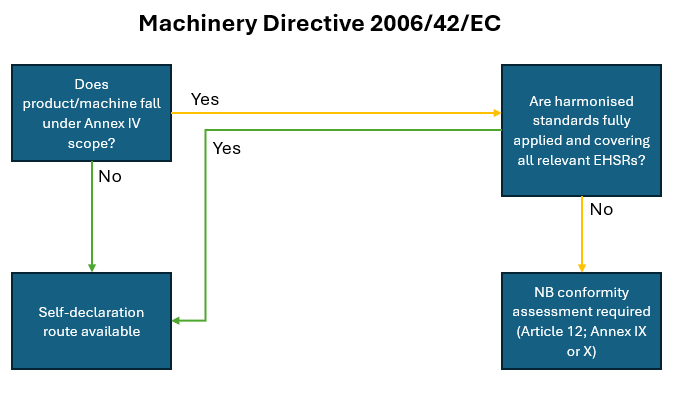
Figure 1. Simplified conformity assessment decision process under Machinery Directive 2006/42/EC
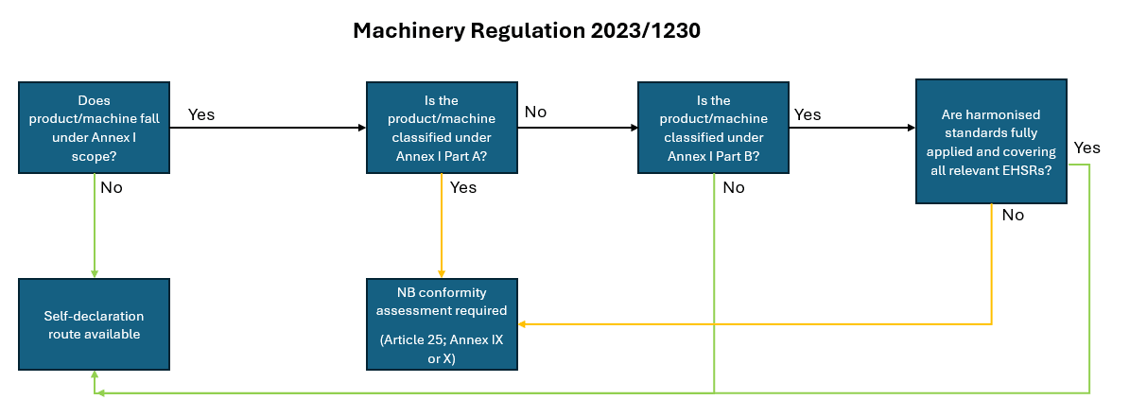
Figure 2. Simplified conformity assessment decision process under Machinery Regulations 2023/1230
The key determining factors are typically:
- Does the machinery fall within the higher-risk categories defined by the legislation?
- Have harmonised standards have been fully applied?
- Will all relevant Essential Health and Safety Requirements (EHSRs) be adequately covered?
- Does the design introduce novel or non-standard technologies?
Although simplified, this type of decision making is often one of the earliest strategic decisions made during machinery development, as it can significantly affect project cost, timelines, and technical documentation expectations.
Final Thoughts
For many machinery products, self-declaration remains a perfectly valid and efficient route to CE marking – particularly where harmonised standards such as EN ISO 13849 are correctly applied.
However, the further a product moves away from recognised harmonised standards and established conformity routes, the more likely independent conformity assessment by a Notified Body becomes necessary. For example, where functional safety is implemented using IEC 61508 alone, this does not provide presumption of conformity under the Machinery Directive or Machinery Regulation. In these situations, involvement of a Notified Body may become necessary depending on the product type, applicable conformity assessment route and whether the product falls within the relevant Annex requirements.
Understanding the relationship between harmonised standards, presumption of conformity, technical documentation and conformity assessment routes is essential. Defining the correct standards and conformity assessment strategy early in development is often the difference between an efficient CE marking process and a costly late-stage redesign.

You may be interested in...
Machinery & Tools
Our experts help ensure your products meet regulatory requirements domestically and globally with expertise in testing and certification.
Industrial Equipment Testing and Certification
Timely and efficient solutions for Industrial Equipment, Machinery, and Tools to some of the world’s most extensive conformity requirements, with added complexity as automation and robotics become integral to operations.